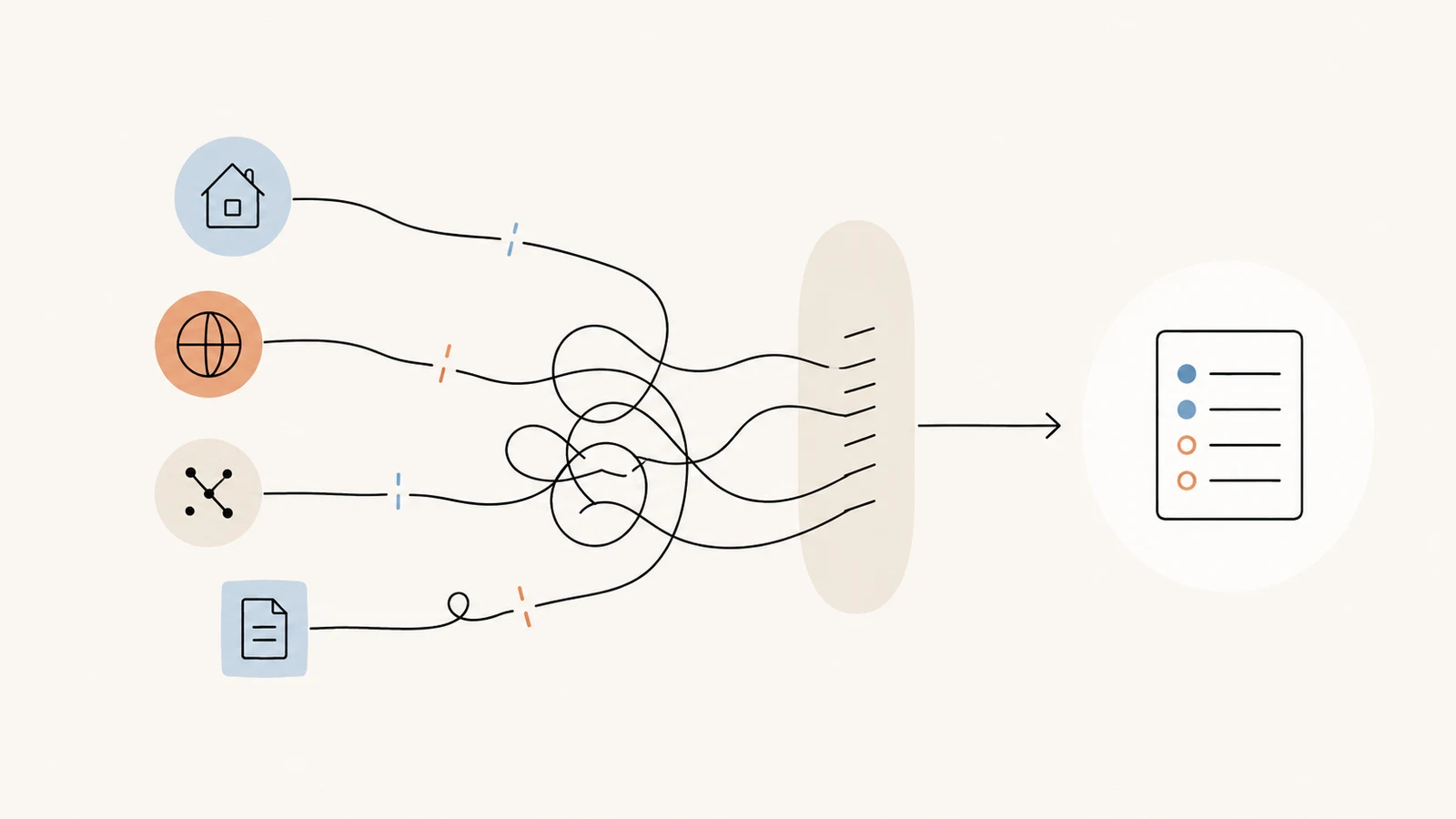
A renewal lands on the desk. The premium is up eleven percent, so the premium is what everyone reads, discusses, and negotiates. The forms schedule – the list of endorsements that decides what the policy actually does – gets skimmed or skipped. That is where the expensive changes live. They are quiet by design: nothing announces them, no cover letter summarizes them, and the client will not discover them until a claim pays differently than everyone expected.
Over the past ninety days, our coverage-check system graded roughly 1,300 findings from live submissions inside a working brokerage. Five renewal changes kept coming back. Each is easy to catch if you know to look for it, and brutal if you don't.
1. Replacement cost becomes actual cash value
The building was insured at replacement cost for years. Then a remarket moves the account, and the new quote settles at actual cash value instead: repair cost minus depreciation. On a decades-old building, that difference can approach half the loss. The version that should scare you: we keep finding quotes whose coverage table says replacement cost while the forms schedule carries an actual cash value endorsement. When the face of a quote and its forms schedule disagree, the forms schedule wins. Check the valuation line, then check the endorsement list for a value definition that contradicts it.
2. Special form becomes basic form
Special form property coverage insures everything except what is excluded. Basic form covers a short named list of perils, and the list includes neither theft nor water discharge from plumbing – two of the most common property claims a small commercial account ever files. A burst pipe under special form is a covered loss. Under basic form it is a denial letter. This swap almost always rides along with a carrier change, where nobody reads the new quote against the old policy line by line.
3. The flat deductible becomes a percentage
A $2,500 wind deductible is a number a client can absorb. A two percent wind and hail deductible is a formula, and on a seven million dollar building the formula computes to $140,000 out of pocket before coverage starts. Percentage deductibles are spreading through renewals right now, and they often arrive while the flat all-other-perils deductible stays put, so the declarations page looks familiar at a glance. Convert every percentage you see into dollars, and put the dollar figure in front of the client.
4. A claims-made trigger inside an occurrence program
An occurrence policy covers what happened while the policy was in force, no matter when the claim surfaces. A claims-made form responds only if the claim arrives while the policy is still alive. We keep finding claims-made coverage parts, complete with retroactive dates, attached inside programs the insured believes are occurrence end to end. The trap springs later: switch carriers or lapse without buying tail coverage, and protection for everything before the switch quietly evaporates. Search every extension and coverage part for the words claims made and retro date. Pollution, professional, and abuse coverages are the usual suspects.
5. The endorsement that simply is not there anymore
The expiring policy carried the additional insured endorsement the client's contracts require. Or the abuse coverage a nonprofit plainly needs. Or the employment practices coverage inside a D&O program. The renewal does not exclude any of it. It just does not include it, which is much harder to see. We watched a nonprofit's D&O renewal delete its employment practices coverage entirely while the premium moved by a few dollars; nothing on the quote said removed. Deletions are invisible unless you compare the renewal against the expiring policy, form by form – which is exactly the reading nobody has time to do by hand.
The five questions
Before anything binds:
- Did the valuation basis change?
- Did the causes-of-loss form change?
- Did any deductible become a percentage, and what is it in dollars?
- Is anything claims-made that used to be occurrence?
- What was on the expiring forms list that is not on this one?
Five questions, five minutes with the right tooling. And every answer belongs in writing, ideally in something the client signs. A renewal that changed quietly and a renewal that changed with a signed disclosure are the same policy. They are very different lawsuits.